How hot does it get in North Texas in summer?
Very hot. At DFW Airport, the 1991–2020 normal high is 95.6°F in July and 95.8°F in August, per the National Weather Service. DFW averages about 20 days a year at 100°F or hotter. The first 100-degree day comes around July 1 on average, and the last around August 27.
| DFW climate fact (NWS, 1991–2020) | Value |
|---|---|
| Normal high, June | 91.5°F |
| Normal high, July | 95.6°F |
| Normal high, August | 95.8°F |
| Average days at 100°F or more per year | about 20 |
| Average first 100°F day | July 1 |
| Average last 100°F day | August 27 |
Data from the NWS Fort Worth DFW normals and 100-degree day records. A plastic unit in full sun runs hotter inside than the air around it.
Why do porta potties smell worse in hot weather?
Heat speeds up the bacteria that break down waste, and warm air carries odor further. The deodorizer in the 60-gallon tank also works harder when the tank gets hot. A porta potty in full afternoon sun at 95°F will smell stronger than the same unit in the shade.
Three things drive summer odor: heat, how full the tank is and how long since the last service. You can control all three with placement, unit count and service timing.
The vent and translucent roof on a standard unit help with light and airflow. They do not cool the unit.
Where should a porta potty go during a Texas summer?
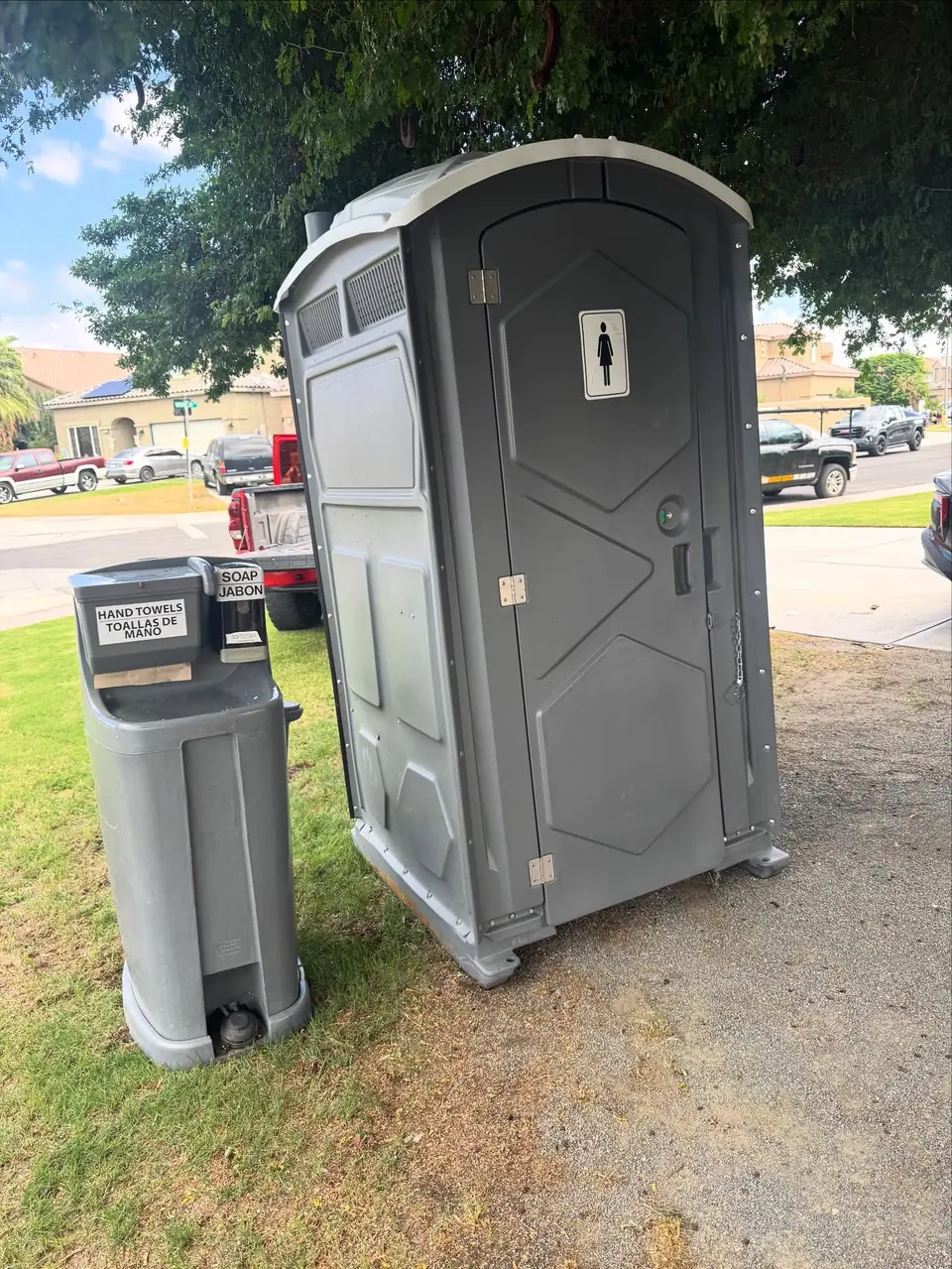
Put the porta potty in shade that lasts through the afternoon, often on the east or north side of a house, fence or tree line. Turn the door away from the west sun. Keep the unit on level, firm ground within about 15 feet of where our truck parks.
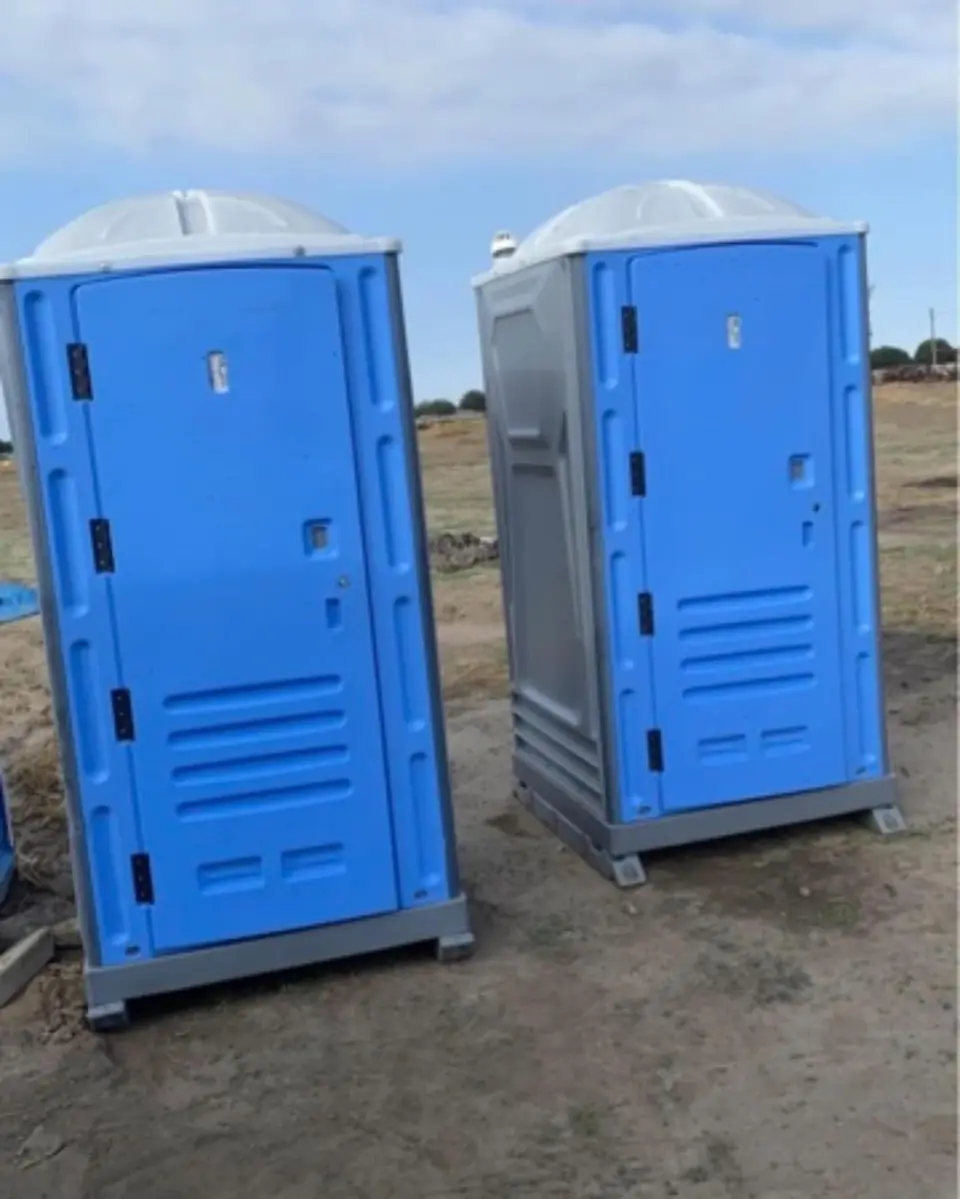
- Watch where shade falls at 3 p.m., not at 10 a.m.
- Leave airflow around the unit. Do not wedge it against a hot brick wall.
- Keep it 25 to 50 feet from food, and downwind if you can.
Our porta potty placement guide covers gates, ground and wind.
Do I need extra porta potty service in summer?
Often, yes. For a multi-day summer event, add a mid-event service visit so the tank never runs full in the heat. For 28-day rentals, weekly service is included, and busy summer jobsites can add a second weekly visit. Each extra visit is quoted before you pay.
Use more units, not fewer. Our sizing method starts at 1 unit per 50 guests for up to 4 hours. Add 1 unit per 100 guests for longer events and 1 more per 100 guests when alcohol is served. Guests drink more water and more drinks on hot days.
Count it with the sizing calculator.
Questions about porta potties in summer heat? Ask Mark's office.Quote requests get a call back within 1 business hour, Mon–Sat 7 AM–7 PM.
Call (972) 812-6200Get quoteIs hand sanitizer enough at a hot summer event?
Hand sanitizer works for most short events, and every standard unit has a sanitizer dispenser. For food, kids or sticky, sweaty hands, add a two-station hand wash sink. The PolyJohn Bravo holds 22 gallons of fresh water for about 350 uses per fill. Plan 1 sink for every 4 toilets.
In our call study, 12% of callers, 20 of 172, asked for handwashing. Summer food events were a big part of that.
See portable hand washing stations for placement next to food tables.
Which portable restrooms have air conditioning?
Only restroom trailers have climate control in our fleet. A restroom trailer needs a standard 110V, 20-amp outlet or a generator, plus a garden hose or an onboard fresh tank. The deluxe flushing porta potty uses a foot pump and has no power hookup, so the deluxe unit has no AC.
| Unit | Air conditioning? | Needs power? |
|---|---|---|
| Standard porta potty | No | No |
| Deluxe flushing unit with sink | No | No, foot-pump flush |
| VIP single-stall cabin | Ask on the quote | Ask on the quote |
| Restroom trailer | Yes, climate control | Yes, 110V/20A outlet or generator |
For a July wedding, power is the first thing to check. If the venue has no outlet near the spot, plan for a generator.
What should outdoor crews know about restrooms in the heat?
Crews drink more water in the heat, so they use restrooms more. Keep the porta potty close to the work so nobody skips water to avoid a long walk. On farms with 11 or more field workers, OSHA 1928.110 requires toilets and handwashing within a quarter-mile walk, plus cool drinking water.
Shade the unit, tie it down and plan service around your busiest week. For jobsites, see our jobsite toilet guide. The farm rule is at OSHA 1928.110.